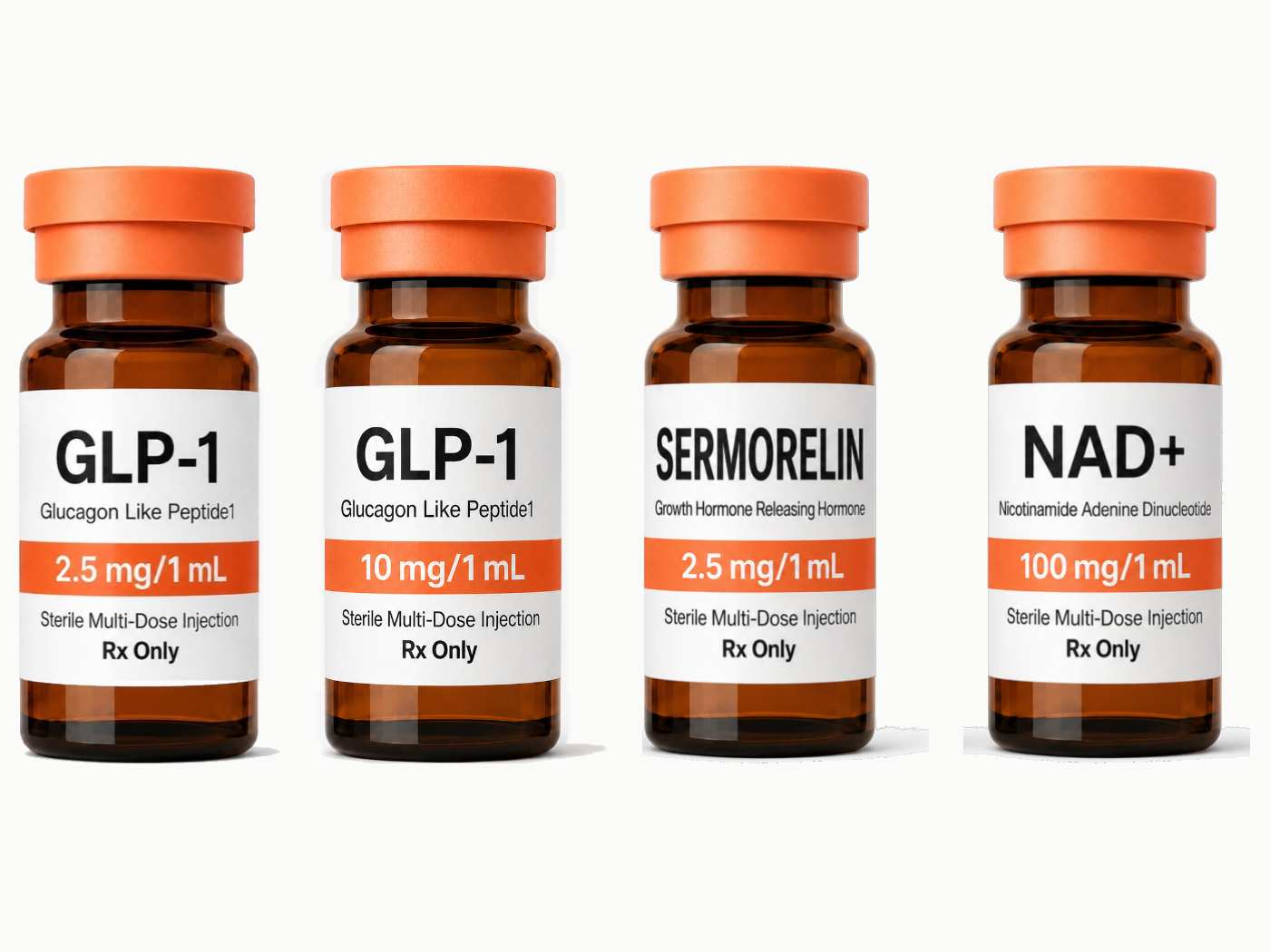
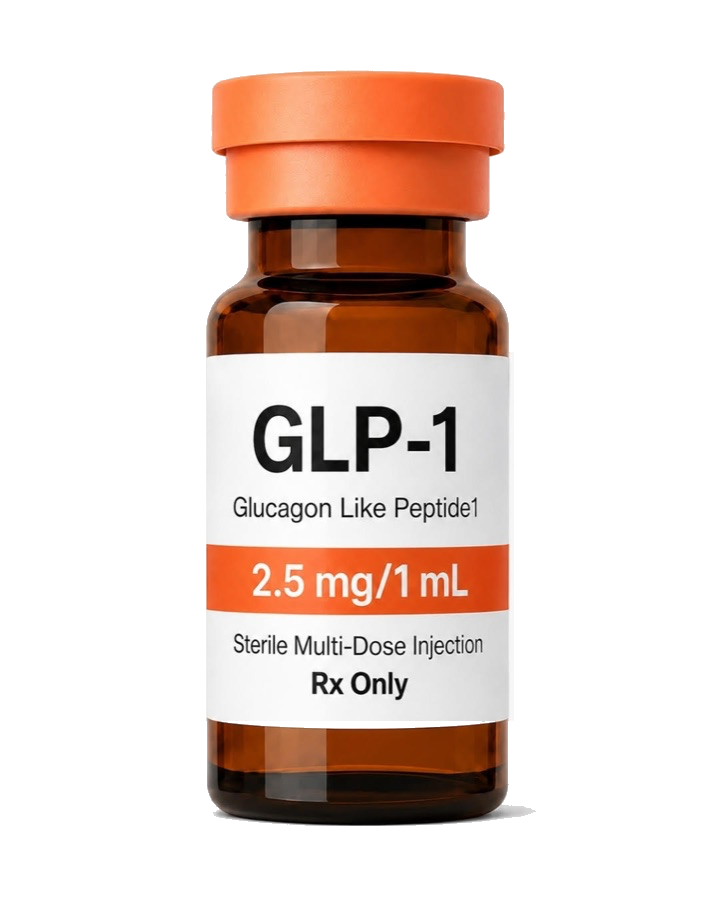
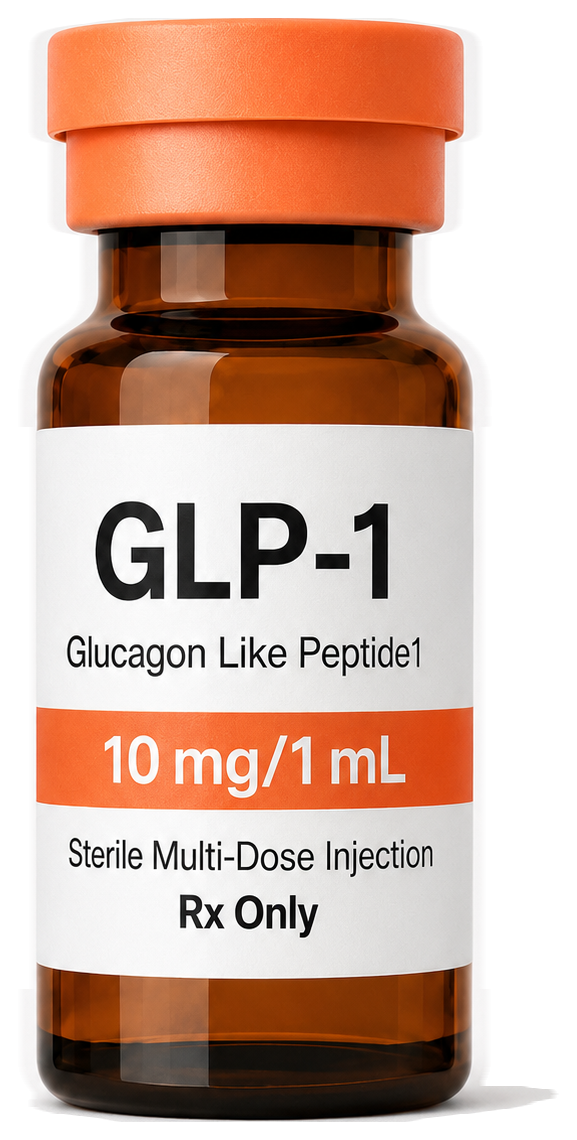
Rx required. Medications are prescribed only when appropriate.
GLP-1, peptide, and coenzyme medications
Available Medication Options
GLP-1
Semaglutide
GLP-1 medication for weight management support
Semaglutide belongs to a class of medications known as GLP-1 receptor agonists. This medication is commonly used with medical weight loss programs and may reduce appetite and curb cravings.
Category
GLP-1 receptor agonist
Common focus
Weight management
Format
Injection
GIP / GLP-1
Tirzepatide
Dual GIP/GLP-1 medication for weight management support
Tirzepatide acts on both GIP and GLP-1 receptors. This medication is commonly used with medical weight loss programs and may reduce appetite and curb cravings.
Category
GIP/GLP-1 receptor agonist
Common focus
Weight management
Format
Injection
Peptide • Available Now
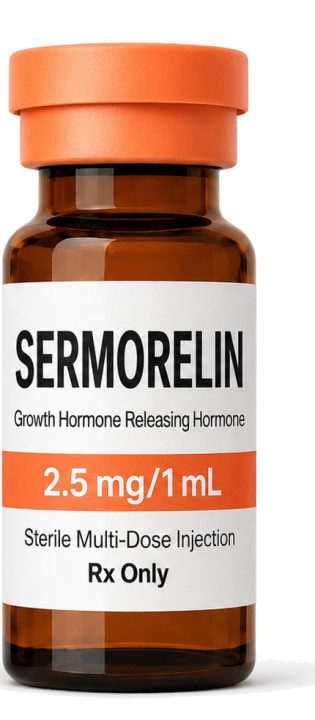
Sermorelin Injection
Injectable peptide medication for wellness and vitality support
Sermorelin is a peptide option related to growth hormone-releasing hormone pathways. It is not a GLP-1 medication. When clinically appropriate, it may improve sleep, promote recovery, and improve body composition.
Category
Peptide / GHRH analog
Common focus
Wellness and vitality
Format
Injection
Coenzyme
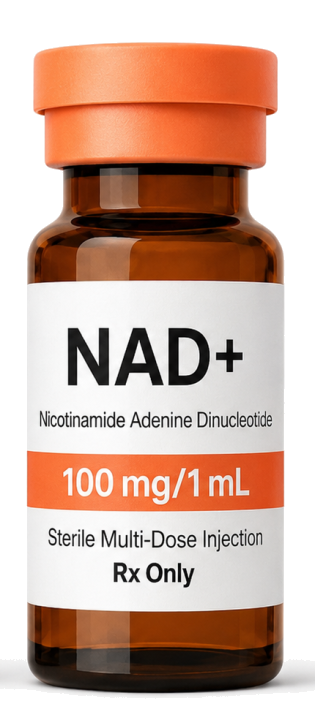
NAD+
NAD+ medication for energy and wellness support.
NAD+ is a coenzyme involved in cellular energy production. When clinically appropriate, it may support energy recovery and overall wellness.
Category
Coenzyme / Wellness Support
Common focus
Energy and vitality
Format
Injection
Coming Soon
Future Peptide Options
PeachScripts is preparing for potential future peptide options if and when FDA approval and other applicable regulatory requirements allow. These products are not currently available through PeachScripts, and final offerings may change.
Coming Soon
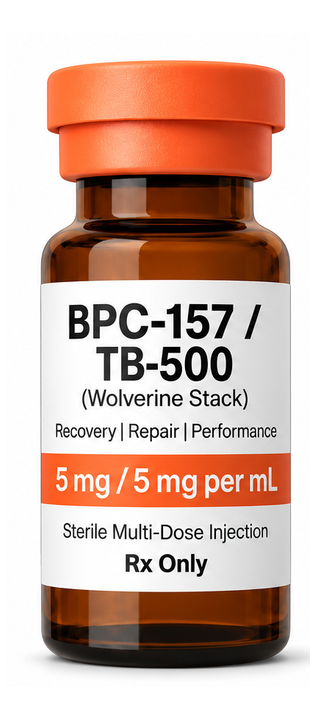
BPC-157 / TB-500 Injection
Often referred to as the “Wolverine Stack”
Planned injectable peptide combination. Additional details, including availability and clinical criteria, will be provided if and when this option becomes available.
Category
Peptide combination
Planned format
Injection
Status
Future option
Coming Soon
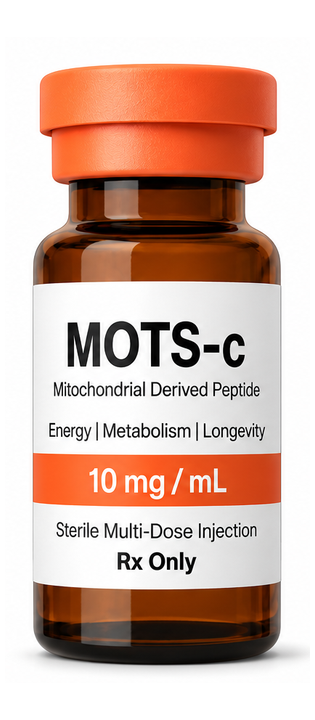
MOTS-c
Future peptide option
Under consideration for future PeachScripts availability. Final formulation, prescribing criteria, and availability have not been announced.
Category
Peptide
Details
To be announced
Status
Future option
Coming Soon
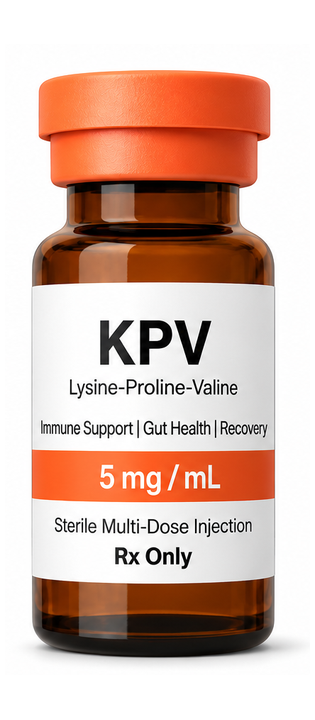
KPV
Future peptide option
Under consideration for future PeachScripts availability. Final formulation, prescribing criteria, and availability have not been announced.
Category
Peptide
Details
To be announced
Status
Future option
Not currently offered. Future availability depends on FDA approval, other applicable regulatory requirements, pharmacy availability, and a licensed provider’s clinical judgment. No treatment or prescription is guaranteed.
Compare
Compare the Medications
Medication
Category
Primary Focus
Potential Benefits
Semaglutide
GLP-1
Weight management
May reduce appetite and curb cravings as part of a medical weight loss program
Tirzepatide
GIP/GLP-1
Weight management
May reduce appetite and curb cravings as part of a medical weight loss program
Sermorelin
Peptide / GHRH analog
Wellness & vitality
May improve sleep, promote recovery, and improve body composition
NAD+
Coenzyme
Energy and vitality
May support energy recovery and overall wellness.
Mechanism
How Each Medication Works
01
Semaglutide
A GLP-1 option
Semaglutide belongs to a class of medications known as GLP-1 receptor agonists. This medication is commonly used with medical weight loss programs and may reduce appetite and curb cravings.
02
Tirzepatide
A dual GIP/GLP-1 option
Tirzepatide acts on both GIP and GLP-1 receptors. This medication is commonly used with medical weight loss programs and may reduce appetite and curb cravings.
03
Sermorelin Injection
An injectable peptide option available now
Sermorelin is a peptide option related to growth hormone-releasing hormone pathways. It is not a GLP-1 medication. When clinically appropriate, it may improve sleep, promote recovery, and improve body composition.
04
NAD+
Coenzyme option
NAD+ is a coenzyme involved in cellular energy production. When clinically appropriate, it may support energy recovery and overall wellness.
Next Step
Interested in GLP-1, peptide, or coenzyme options?
Start with a PeachScripts visit. A licensed provider will review your information and determine what may be appropriate.
What is the difference between semaglutide and tirzepatide?
Semaglutide is a GLP-1 receptor agonist. Tirzepatide acts on both GIP and GLP-1 receptors. Both are commonly associated with medical weight-management treatment, but they are different medications.
Is sermorelin a GLP-1?
No. Sermorelin is not a GLP-1 medication. It is a peptide related to growth hormone-releasing hormone pathways.
Are these injections?
Semaglutide, tirzepatide, sermorelin, and NAD+ are commonly offered as injectable medications.
Can I choose which medication I want?
You can share which medication options you are interested in. Final prescribing decisions depend on clinical appropriateness after a licensed provider reviews your information.
Are compounded medications FDA-approved?
No. Compounded medications are not FDA-approved. FDA does not verify compounded drugs for safety, effectiveness, or quality before they are marketed.
Important Medication Information
Prescription required. Medication availability may vary. Compounded medications, when prescribed, are not FDA-approved. FDA has reported concerns involving compounded semaglutide and tirzepatide, including dosing errors and adverse event reports, so dosing should always follow prescription instructions.
Explore GLP-1, Peptide, and Coenzyme Medication Options
Visits start at $49$25 in October$49. A licensed provider will review your information and determine what may be appropriate.